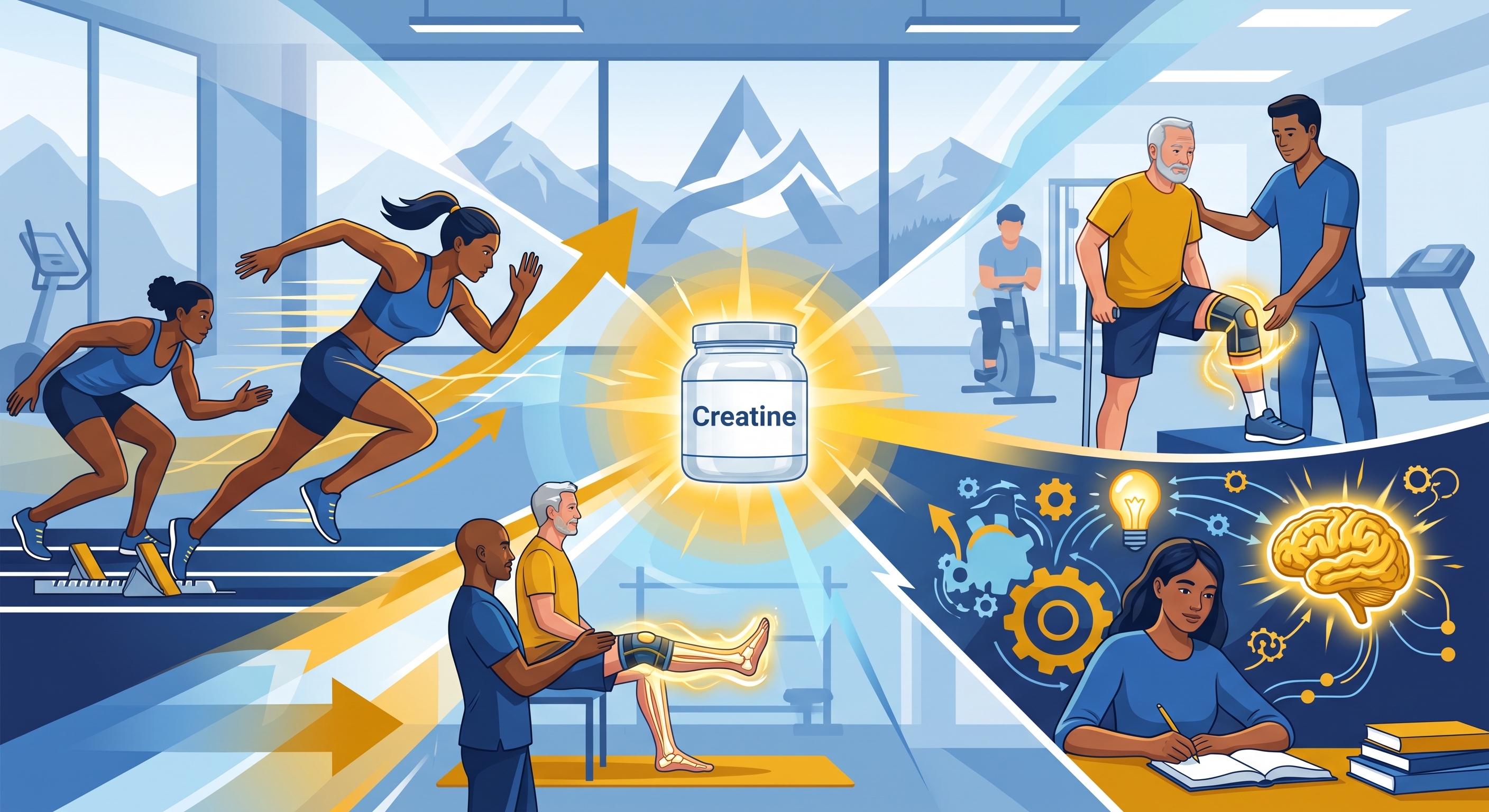
Walk into any gym, and you are bound to hear someone talking about creatine. For years, it was heavily associated with bodybuilders trying to pack on massive amounts of muscle. However, modern sports science has completely shifted how we view this powerful supplement.
Creatine is one of the most effective, accessible tools available to support your physical and mental health. Here is everything you need to know about what creatine is, how it works, and why you might want to add it to your daily routine.
Creatine is a natural compound stored primarily in your muscle cells, with smaller amounts found in the brain, liver, and kidneys. Your body naturally generates about 1 gram of creatine daily, and you can get more through a diet rich in red meat and fish.
To understand why creatine is so powerful, you have to understand ATP (Adenosine Triphosphate). ATP is your body’s primary energy currency for high-intensity, explosive activities. When you sprint, jump, or lift a heavy weight, your muscles burn through ATP rapidly.
Once your ATP is depleted, fatigue sets in. This is where creatine steps up. Supplementing with creatine boosts your muscles' stores of creatine phosphate, which your body uses to rapidly regenerate ATP. By sustaining your energy levels, creatine allows for better performance, more reps, and increased strength output before exhaustion hits.
This is the most common question we hear at the clinic. The short answer is: Yes. Creatine monohydrate is the most widely researched sports supplement in history. It is highly effective, affordable, and well-accepted in the medical literature as safe for long-term use in healthy individuals.
For the active athlete or the patient working hard in physical therapy, creatine provides a massive advantage in rebuilding tissue and generating power.
You do not need to be a competitive athlete to benefit from creatine. It is highly recommended for aging adults, those following plant-based diets (who naturally have lower baseline creatine levels), and anyone looking to optimize their daily health.
Adding creatine to your routine is incredibly simple.
Trusted Brands Because the supplement industry is not strictly regulated, you should only purchase creatine that has undergone third-party testing for purity and potency. Look for the NSF Certified for Sport label. We highly recommend the following brands, which manufacture and test their creatine monohydrate in the U.S. to the highest quality standards:
Creatine is one of the most researched and effective sports supplements available today. Whether you're looking to increase strength, improve workout performance, or support muscle growth, creatine monohydrate consistently delivers results. However, many consumers wonder whether the form of creatine—or even the temperature of the water they mix it with—affects absorption and effectiveness.
Let's examine what the science says about creatine absorption in powder versus gummies and whether hot or cold water makes a difference.
Once consumed, creatine travels through the digestive system and is absorbed primarily in the small intestine. From there, it enters the bloodstream and is transported into muscle cells, where it is stored as phosphocreatine and used to help regenerate ATP, the body's primary energy currency during high-intensity exercise.
The key factor is not necessarily how creatine is delivered, but whether you consistently consume an adequate daily dose—typically 3 to 5 grams per day for maintenance.
Creatine monohydrate powder remains the gold standard.
Benefits include:
Because the powder dissolves in liquid before consumption, absorption is generally efficient and predictable.
Creatine gummies have become increasingly popular due to convenience and taste.
Benefits include:
However, gummies often contain additional ingredients such as sugars, sweeteners, and stabilizers. Some products may require several gummies to achieve a full 5-gram serving, which can increase calorie and sugar intake. Quality control is more challenging with gummies - there is no guarantee that the amount of creatine on the label is what you’re actually getting in each gummy.
Another common question is whether creatine should be mixed with hot or cold water.
Mixing creatine with cold water is perfectly acceptable and does not reduce its effectiveness.
The main drawback is that creatine monohydrate is less soluble in cold liquids, meaning some powder may settle at the bottom of the glass.
However, as long as you drink the entire mixture, you will still consume the full dose.
Creatine dissolves more easily in warm or hot water, creating a smoother drink with less sediment.
This improved solubility can make consumption more pleasant and may reduce the gritty texture some people dislike.
Extremely high temperatures over prolonged periods can gradually convert creatine into creatinine, a breakdown product that does not provide the same performance benefits.
In practical terms, this is rarely an issue.
Mixing creatine into warm coffee, tea, or hot water and drinking it shortly afterward is unlikely to significantly reduce effectiveness. Problems would only arise if creatine remains in very hot liquid for extended periods.
Not necessarily.
While warm water helps creatine dissolve more completely, the body ultimately absorbs creatine effectively regardless of whether it is fully dissolved when consumed.
Improved solubility mainly affects convenience and drink texture rather than muscle uptake.
For most people, the optimal approach is simple:
For maximum potency:
Request your initial evaluation today, or get to know the clinical team behind our evidence-based care.