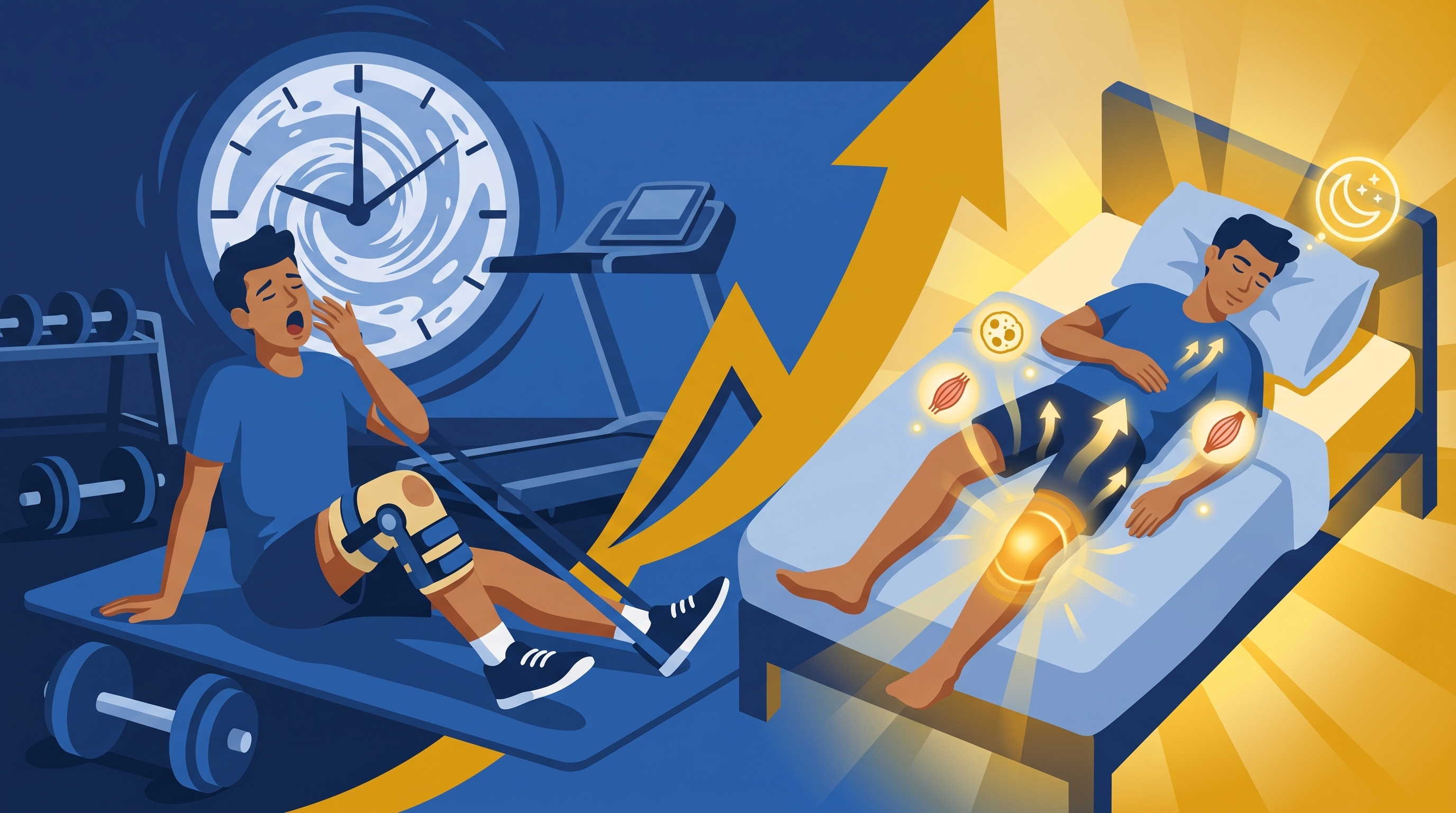
We see a lot of highly active, driven patients at Ascent Physical Therapy & Performance. Between logging miles on the trails around Newbury Park, hitting the gym, and managing busy careers, it is easy to rely on an extra cup of coffee to push through the day.
But your brain—and your body—called. They want more sleep so they can actually function.
While manual therapy, targeted exercises, and active recovery are critical components of rehabilitation, you cannot out-rehab a bad sleep schedule. Skipping the caffeine overload and prioritizing a full night of rest is one of the most powerful things you can do to accelerate your healing.
Why Sleep is Your Body’s Most Valuable Tool
When you are asleep, your body is not just shutting down; it is actively working to repair itself. Whether you are recovering from a surgical procedure or nursing a chronic running injury, sleep is the optimal time for recovery.
Here is what happens behind the scenes when you get adequate rest:
- Muscle Growth and Repair: Deep sleep triggers the release of human growth hormone, which stimulates tissue repair and muscle growth.
- Injury Risk Reduction: Fatigue alters your biomechanics and slows your reaction time. Well-rested individuals are significantly less likely to sustain acute injuries.
- Hormonal Homeostasis: Sleep regulates the hormones that manage stress (cortisol) and inflammation, keeping your body in a prime state for healing.
- Strengthened Immune System: A robust immune response is vital for cellular repair and fighting off systemic inflammation.
- Enhanced Mental Well-Being: Dealing with pain can be exhausting. Sleep improves cognitive function, mood, and your psychological resilience during the rehab process.
Are You Getting Enough?
The amount of sleep your body requires to perform these vital functions changes as you age. Here are the current medical recommendations for total hours per night:
- Children (6-12 years): 9 to 12 hours
- Teens (13-17 years): 8 to 10 hours
- Young Adults (18-25 years): 7 to 9 hours
- Adults (25-64 years): 7 to 9 hours
- Older Adults (65+ years): 7 to 8 hours
How to Build a Better Bedtime Routine
Knowing you need more sleep is easy; actually getting it can be tough. Try implementing these daily habits to improve your sleep quality:
Do This:
- Maintain a Consistent Schedule: Aim to go to sleep and wake up at the exact same time every day to regulate your circadian rhythm.
- Cool It Down: Keep your bedroom temperature slightly cool, ideally between 60-69 degrees Fahrenheit.
- Embrace the Dark: Make your room as pitch-black as possible using blackout curtains or an eye mask.
- Minimize Distractions: Keep phones, tablets, and TVs out of the bedroom to reduce your exposure to blue light.
Avoid This:
- Late-Day Stimulants: Avoid alcohol and caffeine within 5 hours of your bedtime.
- Late-Night Workouts: Try to wrap up vigorous exercise at least 3-4 hours before bed so your core temperature and heart rate have time to drop.
- Heavy Dinners: Avoid eating large meals right before lying down.
- Daytime Napping: Naps can disrupt your sleep drive, making it harder to fall asleep at night.
- Pre-Bed Stress: Avoid scrolling through the news, answering work emails, or doing overly stimulating activities right before lights out.