
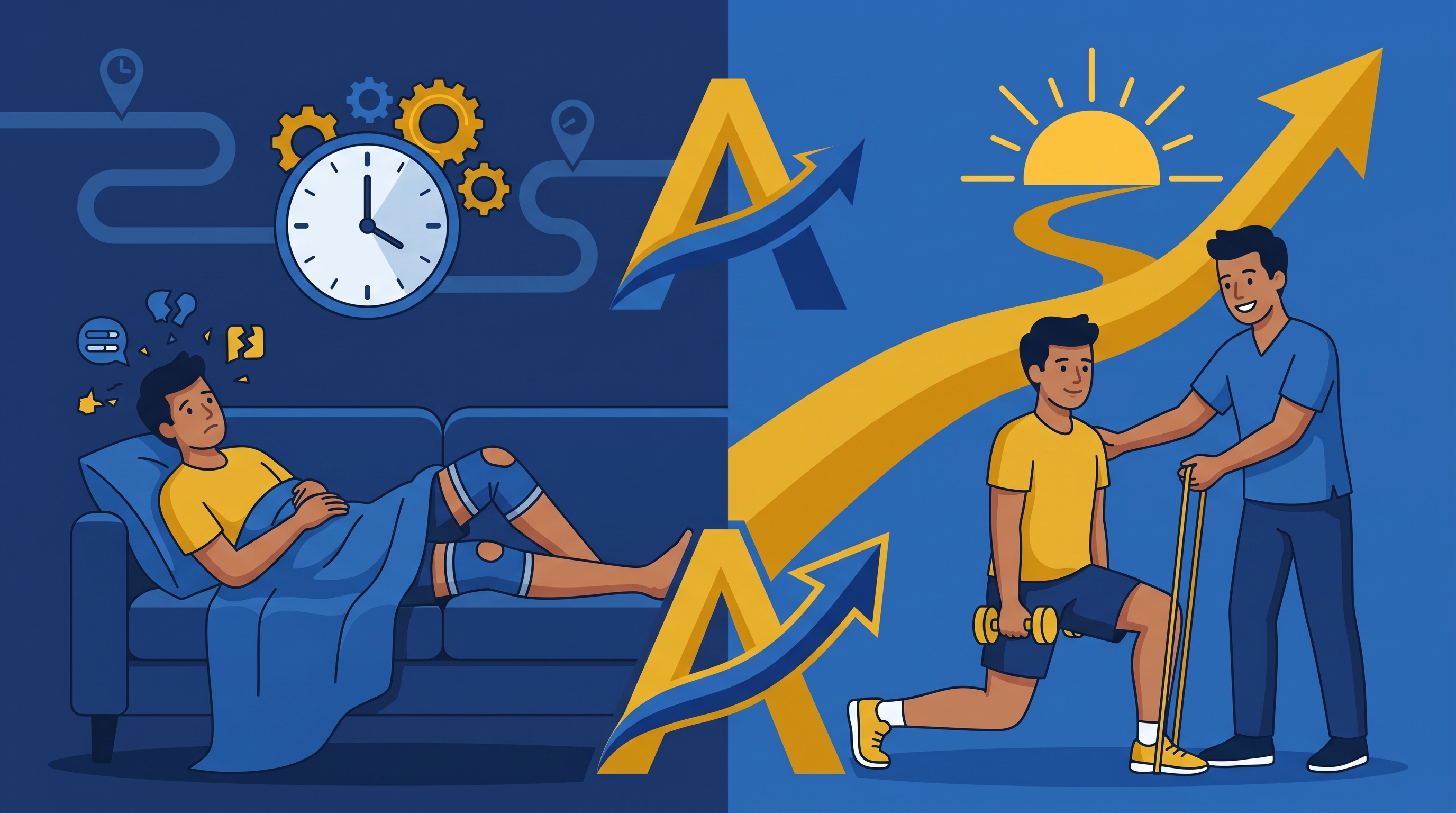
When you experience a sudden injury or a flare-up of joint pain, your first instinct is likely to head to the couch. For decades, the standard medical advice for a tweaked knee, a sore lower back, or a sprained ankle was to simply "rest and ice”.
While taking a brief break from heavy, painful activities may be necessary, complete and prolonged rest is rarely the best approach to rehabilitation. In fact, resting an injury too much might actually be making it worse.
To understand why rest isn't always best, it helps to understand why injuries occur. In most cases, musculoskeletal pain happens when your physical activity levels increase faster than your tissues have the capacity to adapt.
Whether you suddenly doubled your running mileage on the trails around Newbury Park or spent an entire weekend doing heavy yard work, you placed a load on your muscles, tendons, or joints that exceeded what they were currently prepared to handle.
It makes logical sense that resting after an injury would help. And to a certain extent, it does temporarily ease your symptoms because you are no longer stressing the sensitive area. However, prolonged rest causes a hidden problem: it actually lowers your body's tissue capacity.
When you stop moving, your body quickly adapts to that lack of movement. Extended rest leads to several negative side effects:
While a brief period of rest is sometimes helpful for severely damaged or highly irritable tissues in the first few days following an acute injury, the ultimate goal is to keep your tissues as conditioned as possible.
The modern approach to physical therapy focuses on active recovery. This involves using controlled, targeted movements to stimulate tissue healing and accelerate the recovery process. Instead of waiting weeks for the pain to completely disappear, the focus shifts to progressively loading the tissue to build resilience.
You shouldn't just push blindly through severe pain, but you also shouldn't stay perfectly still. The key to successful rehab is finding the "sweet spot" of movement that encourages healing without causing further damage.
This means incorporating progressive strengthening and range-of-motion exercises safely. Because every injury is different, these movements must be guided by specific tissue-healing timelines. Your physical therapist will assess your level of tissue irritability to determine the exact right amount of stress to apply at each stage of your recovery.